
State retirement mandates now reach employers of nearly every size.
Many cannabis employers still think of a 401(k) as optional. Depending on where employees work, company size and how long the business has operated, state law may already require action. More than 20 states have authorized retirement savings programs, and in states with employer mandates, a covered business generally must either facilitate the state program or offer a qualifying retirement plan, such as a 401(k). Some states also require employers with their own plan to register or certify an exemption.
A qualifying 401(k) can generally satisfy the requirement while giving cannabis businesses more control over the benefit they provide.
State retirement mandate quick reference
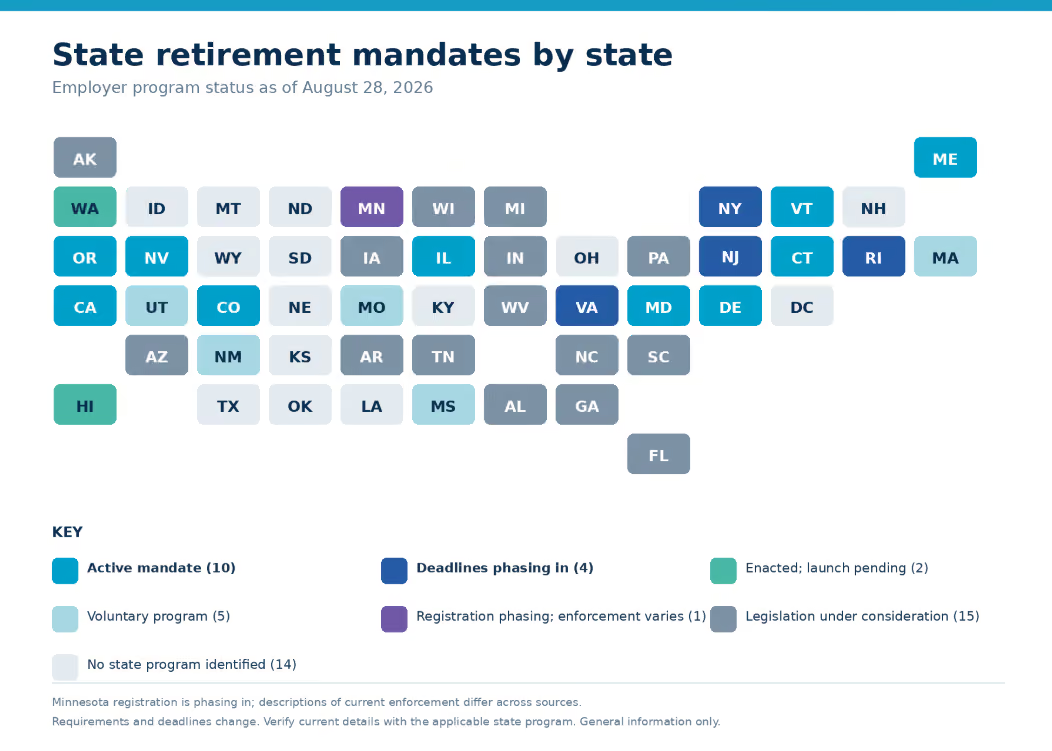
This quick guide summarizes the employers generally affected. Definitions, exemptions and deadlines vary, so confirm your status with the applicable state program. Status as of August 28, 2026. Requirements, exemptions and deadlines vary. Employers should confirm their obligations with the applicable state program.
Active programs
- California: Generally applies to employers with one or more eligible employees. Status is reassessed annually.
- Colorado: Generally applies to employers with five or more employees that have been in business for at least two years.
- Connecticut: Generally applies to employers with five or more employees earning at least $5,000 in taxable wages that have been in business for two full calendar years.
- Delaware: Generally applies to employers with five or more W-2 employees that have operated for at least six months.
- Illinois: Generally applies to employers with five or more employees in every quarter of the prior year that have been in business for at least two years.
- Maine: Generally applies to employers with five or more employees that have been in business for at least two years.
- Maryland: Generally applies to employers with at least one W-2 employee over age 18 that have operated for two calendar years and use an automated payroll system.
- Nevada: Generally applies to employers with six or more employees that have operated for at least 36 months and have not offered a tax-favored retirement plan during the current or previous three calendar years.
- New York: Generally applies to employers with 10 or more employees throughout the prior calendar year that have been in business for at least two years and have not offered a qualified plan during the prior two years.
- Oregon: Generally applies to employers with one or more employees.
- Vermont: Generally applies to employers with two or more employees that have been in business for at least two years.
Phased or expanding programs
- Minnesota: Generally applies to employers with five or more employees. The deadline for employers with 50–99 employees is December 31, 2026, with smaller employers phased in through June 2028.
- New Jersey: Generally applies to employers with 10 or more employees that have been in business for at least two years. Registration timing for the newly covered 10–24 employee tier is pending.
- Rhode Island: Generally applies to employers with five or more employees. The deadline for employers with 100 or more employees is October 15, 2026, with smaller employers phased in through 2028.
- Virginia: Generally applies to employers with five or more employees that have been in business for at least two years. Newly covered employers receive deadlines by notice.
Programs preparing to launch
- Hawaii: Launch is projected for late December 2026. The mandate is expected to apply to employers with at least one employee that have been in business for two years and have not offered a qualified plan during the prior two years.
- Washington: Launching in 2027. The program generally covers employers with a physical presence in the state that have operated for at least two years and whose employees work a combined 10,400 or more hours annually, roughly five full-time equivalents.
Massachusetts, Mississippi, Missouri, New Mexico and Utah currently offer voluntary programs rather than general private-sector mandates.
Other states and Washington, D.C., either have no active statewide requirement or are considering legislation.
For a national view, see the Georgetown Center for Retirement Initiatives state-program tracker.
Why a 401(k) may be the better response
Most state programs use an automatically enrolled Roth IRA funded entirely through employee payroll deductions. Employers generally cannot contribute, and IRA contribution limits are lower than 401(k) limits. A qualifying 401(k) can generally satisfy the mandate while offering greater flexibility in contributions, plan design and workforce strategy.
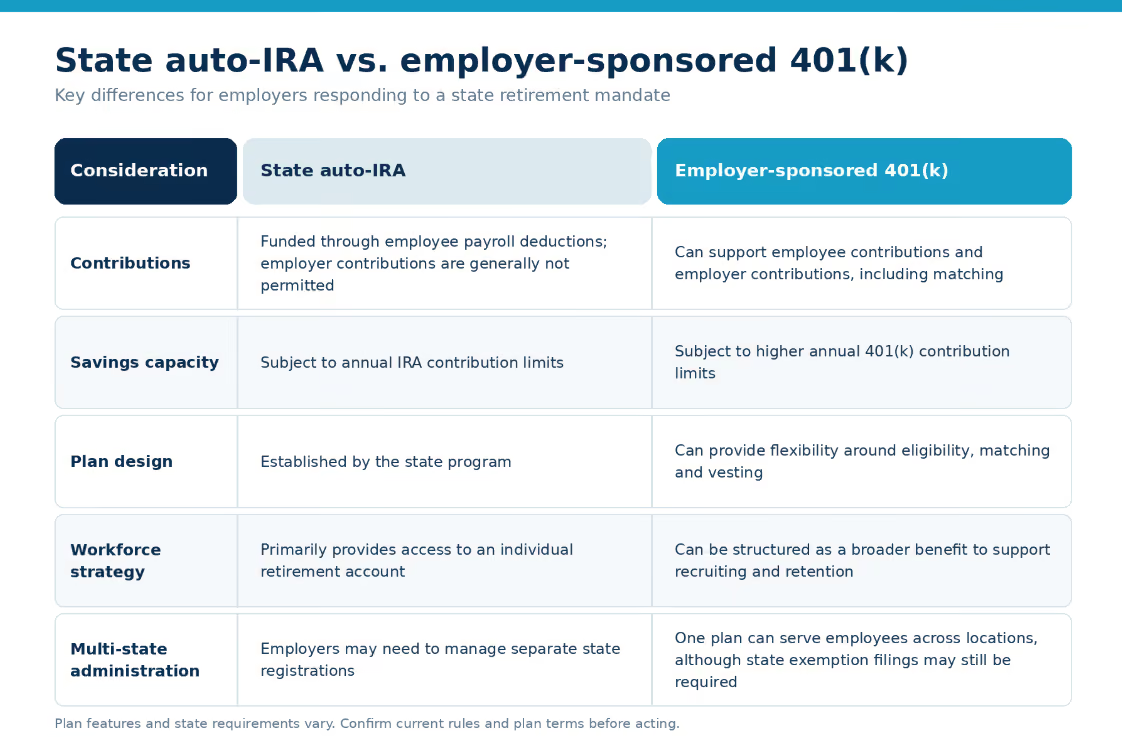
A 401(k) does not eliminate every state step. Employers may still need to register an exemption, and multi-state businesses should check requirements wherever employees work.
Cannabis businesses need compatible providers
Cannabis employers face an additional consideration. Every organization supporting the plan, including the administrator, recordkeeper, custodian and investment providers, must be willing and structured to serve cannabis-related businesses. A gap in that chain can create disruption later. The Safe Harbor Retirement Plan is a cannabis-focused 401(k) structured as a Pooled Employer Plan, or PEP, bringing together plan setup, administration, compliance, recordkeeping, participant support, investment oversight and custodial coordination in one professionally managed structure.
Employers retain flexibility around eligibility, contributions and vesting, while certain administrative and fiduciary responsibilities are handled within the PEP. The program is built with custodial institutions and fund companies approved to support cannabis retirement-plan assets. Eligible small employers may also qualify for federal startup tax credits of up to $5,000 per year for three years, subject to IRS requirements, with additional credits potentially available for employer contributions and automatic enrollment.
What employers should do now
- Check every state where employees work.
- Confirm the applicable headcount, business-tenure and deadline rules.
- Compare the state program with a qualifying 401(k).
- If choosing a 401(k), confirm that every provider supports cannabis businesses.
- Complete and document any required state registration or exemption.
Do not assume that a small workforce or the absence of a state notice means the requirement does not apply.
This article is for general informational purposes only and does not constitute legal, tax or investment advice. State requirements change. Employers should confirm current rules with the applicable state program and their professional advisors.