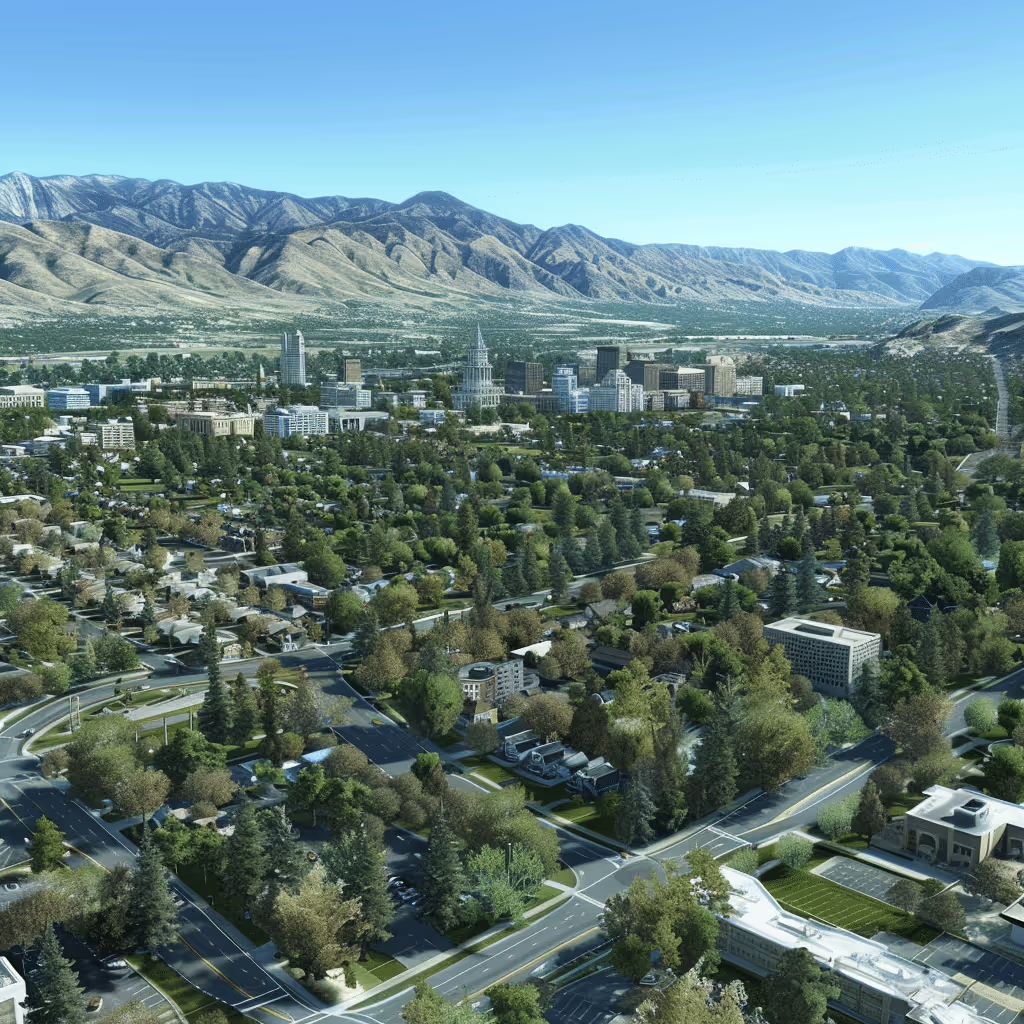
Salt Lake City is Utah’s capital and largest city.
How Utah Regulates Medical Cannabis
Utah has a medical-only cannabis program, and patients buy from state-licensed medical cannabis pharmacies. Pharmacy licenses carry different fees for urban and rural locations, plus an added fee for home delivery. Adult-use cannabis is not legal in Utah.
What This Means for Banking a Salt Lake City Cannabis Business
With a limited number of licensed pharmacies, cultivators and processors, Utah’s medical market depends on operators and suppliers that can manage cash and compliance reliably.
Safe Harbor helps Salt Lake City pharmacies, cultivators, processors and ancillary businesses with compliant business accounts, treasury and cash management, ACH and wire payments, payroll and lending.
Cannabis Legalization and Regulation in Utah
Medical cannabis was legalized in 2018 through the Utah Medical Cannabis Act. Registered patients with qualifying conditions may obtain a physician or advanced practice provider recommendation and purchase cannabis from licensed pharmacies. Patients may possess up to a 30-day supply of medical cannabis in approved forms, including flower, tablets, capsules, concentrated oils, liquids, topicals, transdermal patches, and gummies. Smoking cannabis is prohibited, though patients may use vaporization devices for flower and oils.
Home cultivation is generally not permitted. However, patients who live more than 100 miles from a licensed pharmacy may qualify for a limited home-grow exemption, allowing up to six plants for personal medical use.
The Utah Department of Health and Human Services oversees patient registration and provider certifications, while the Utah Department of Agriculture and Food regulates cultivation, processing, and testing. Licensed medical cannabis pharmacies dispense products across the state under strict inventory tracking, labeling, and packaging requirements.
Utah has not legalized adult-use cannabis. Recreational possession, sale, and cultivation remain illegal statewide and subject to criminal penalties.
Some cities have reduced penalties for small possession, but marijuana remains prohibited outside of the medical program.
Hemp cultivation and hemp-derived CBD products are legal in Utah if they contain no more than 0.3% THC. Products intended for human consumption must be registered with the Department of Agriculture and Food, and intoxicating hemp cannabinoids such as delta-8 THC are restricted.
Federal rules are changing as well. In April 2026, the federal government moved marijuana covered by a qualifying state medical license to Schedule III, which removes the Section 280E tax penalty for that medical activity. That change could meaningfully improve cash flow for licensed medical operators, although Treasury guidance on implementation is still developing. Separately, a narrower federal definition of hemp took effect on November 12, 2026, moving many intoxicating hemp-derived products outside the federal hemp category.
For cannabis operators, Utah’s medical-only program requires strong compliance. Licensed operators must provide state licensing documentation, tax IDs, ownership disclosures, financial records, and operating agreements when seeking banking or financial services. Because transactions remain cash-heavy, financial institutions require armored transport, reconciled deposits, AML/BSA monitoring, and audit-ready accounting systems. Excise tax and sales tax compliance is also required for all medical cannabis sales.
The Utah Department of Health and Human Services and the Utah Department of Agriculture and Food oversee the medical cannabis program. For official information, licensing updates, and compliance resources, visit: https://medicalcannabis.utah.gov
Disclaimer: The information on this page is provided for general informational purposes only and does not constitute legal, tax, regulatory or financial advice. Cannabis and hemp laws and regulations change frequently, and while we strive to keep this content current, Safe Harbor Financial makes no representations or warranties as to its accuracy, completeness or timeliness. Do not rely on this information as a substitute for advice from a qualified attorney, accountant or other professional. Always consult official Utah and federal sources for current requirements. Safe Harbor Financial disclaims any liability for actions taken or not taken based on the content of this page. Last updated November 2026.